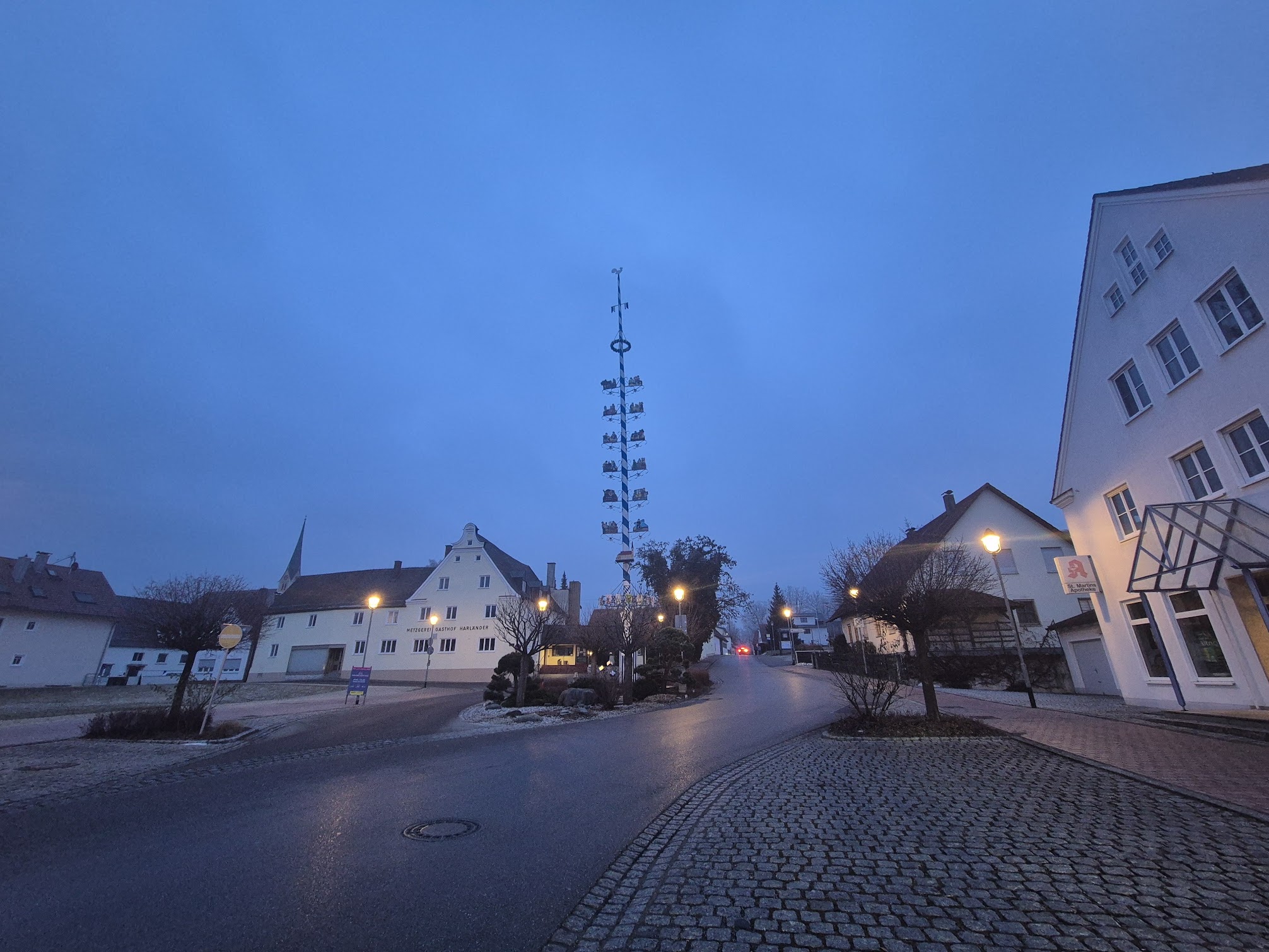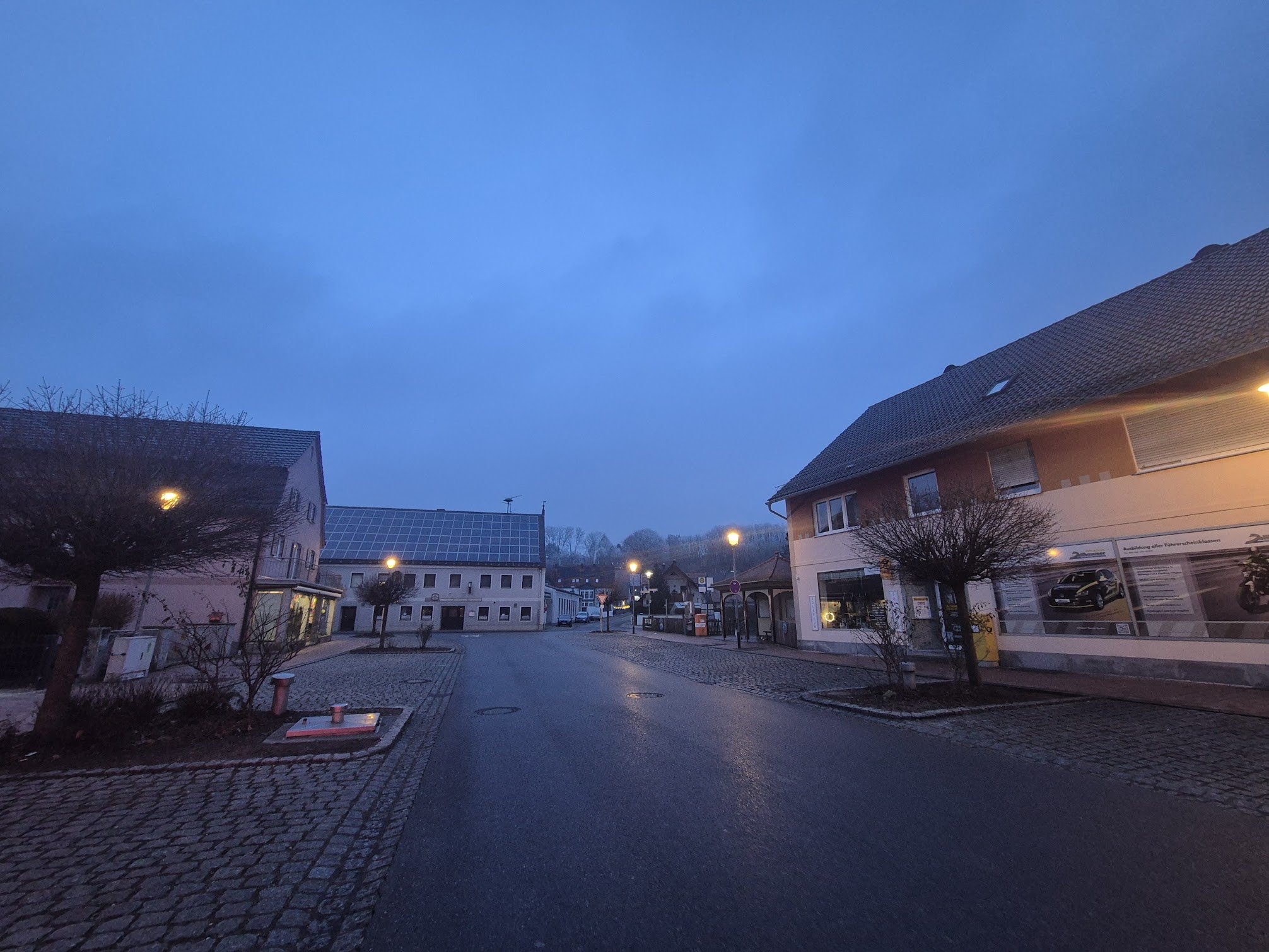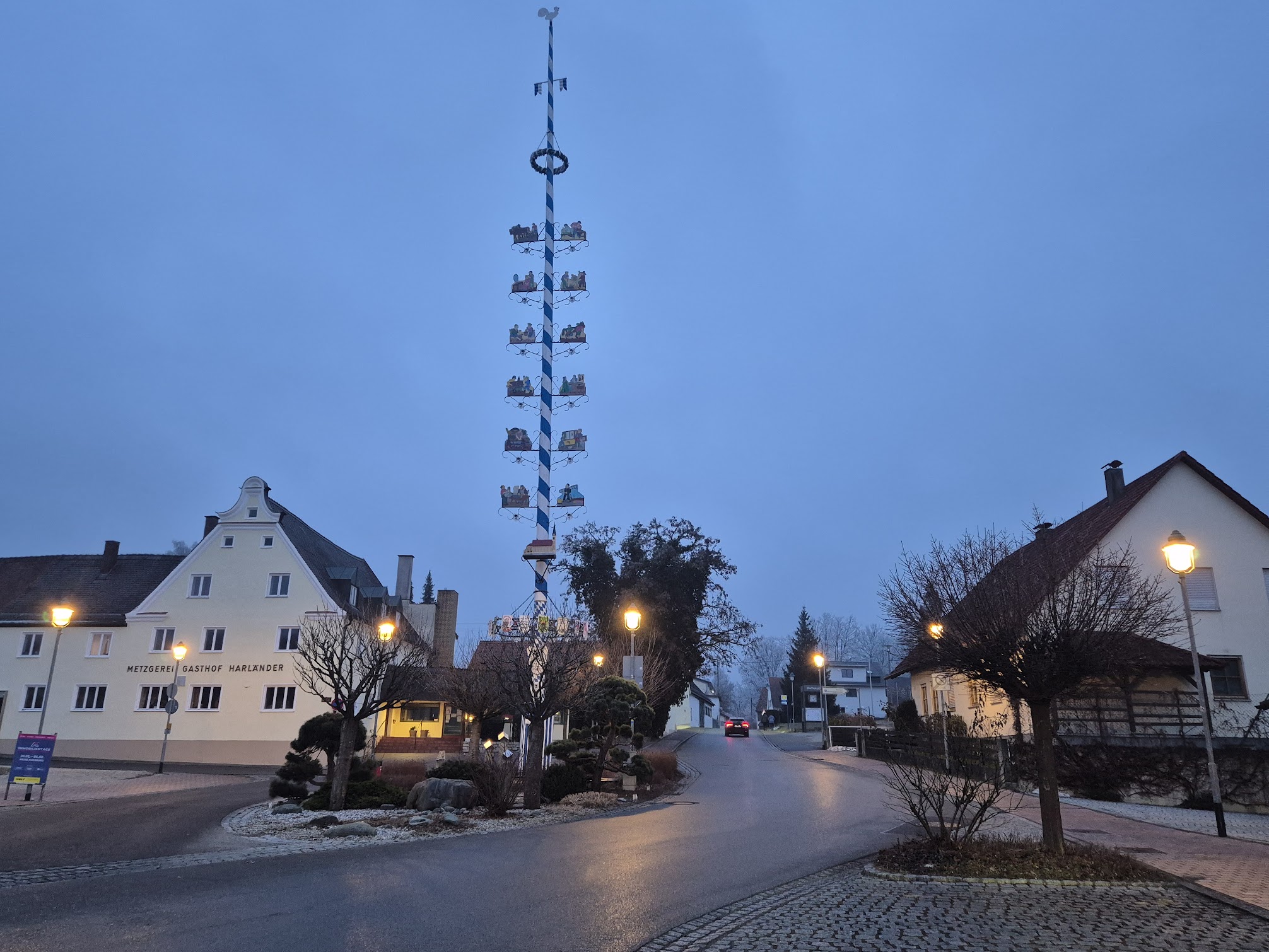
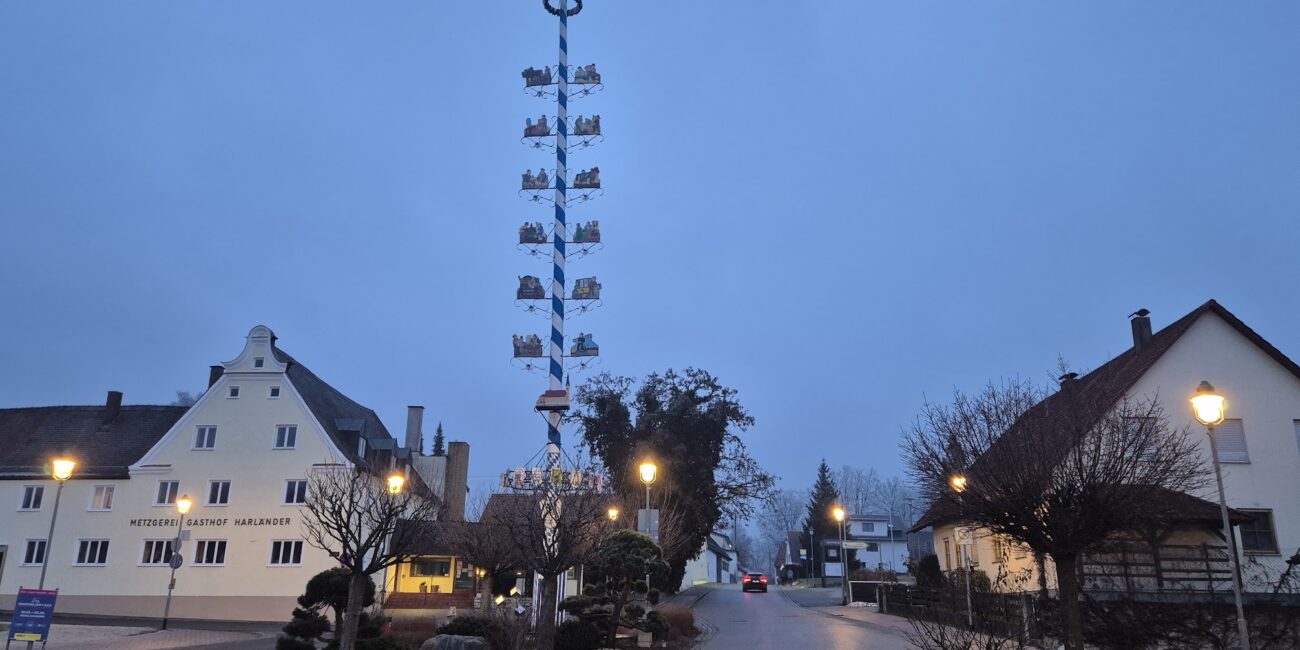
Arriving in Aindling, the first thing that embraced me wasn’t the view — it was the feeling. That gentle, almost cinematic calm of a Bavarian village moving to its own rhythm. The sky hung low, soft blue and slightly misty, as if it had quietly settled over the rooftops. Streetlights came on early, creating small warm islands within the cold landscape. The streets were empty, immaculate — carrying that distinct German sense of order that doesn’t impose itself, but instead soothes you.
The heart of the village
At the very center, a striking traditional pole — the Maibaum — rises proudly. Decorated with small figurines that depict everyday life, it is far more than a decorative element. It is memory. It is identity.
A life that quietly continues
The houses around it feel as if they belong to another era. White facades, earthy-toned rooftops, small windows glowing warmly as the afternoon fades. Some still bear old trade signs — silent reminders that tradition here hasn’t disappeared, it simply carries on.
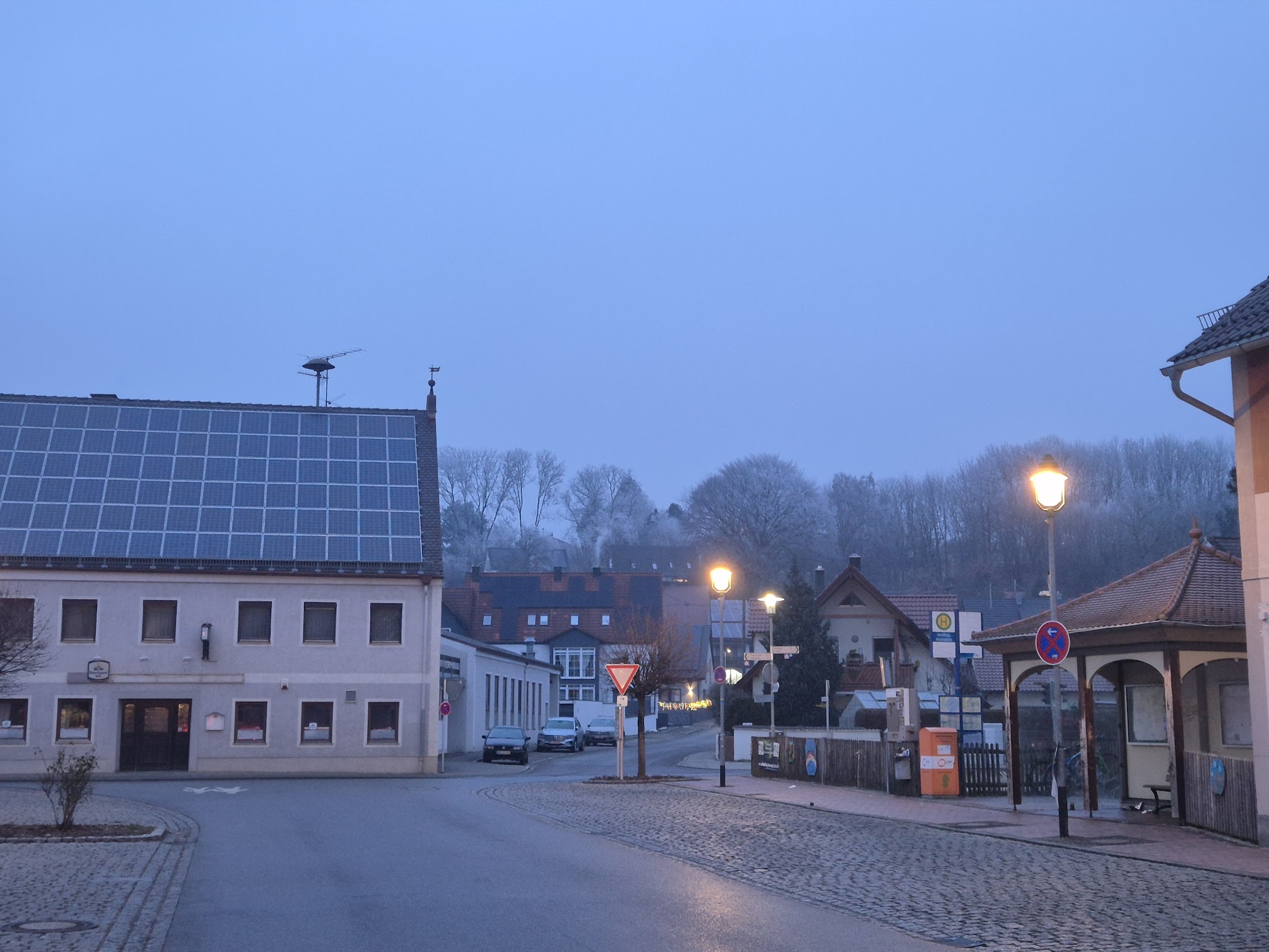
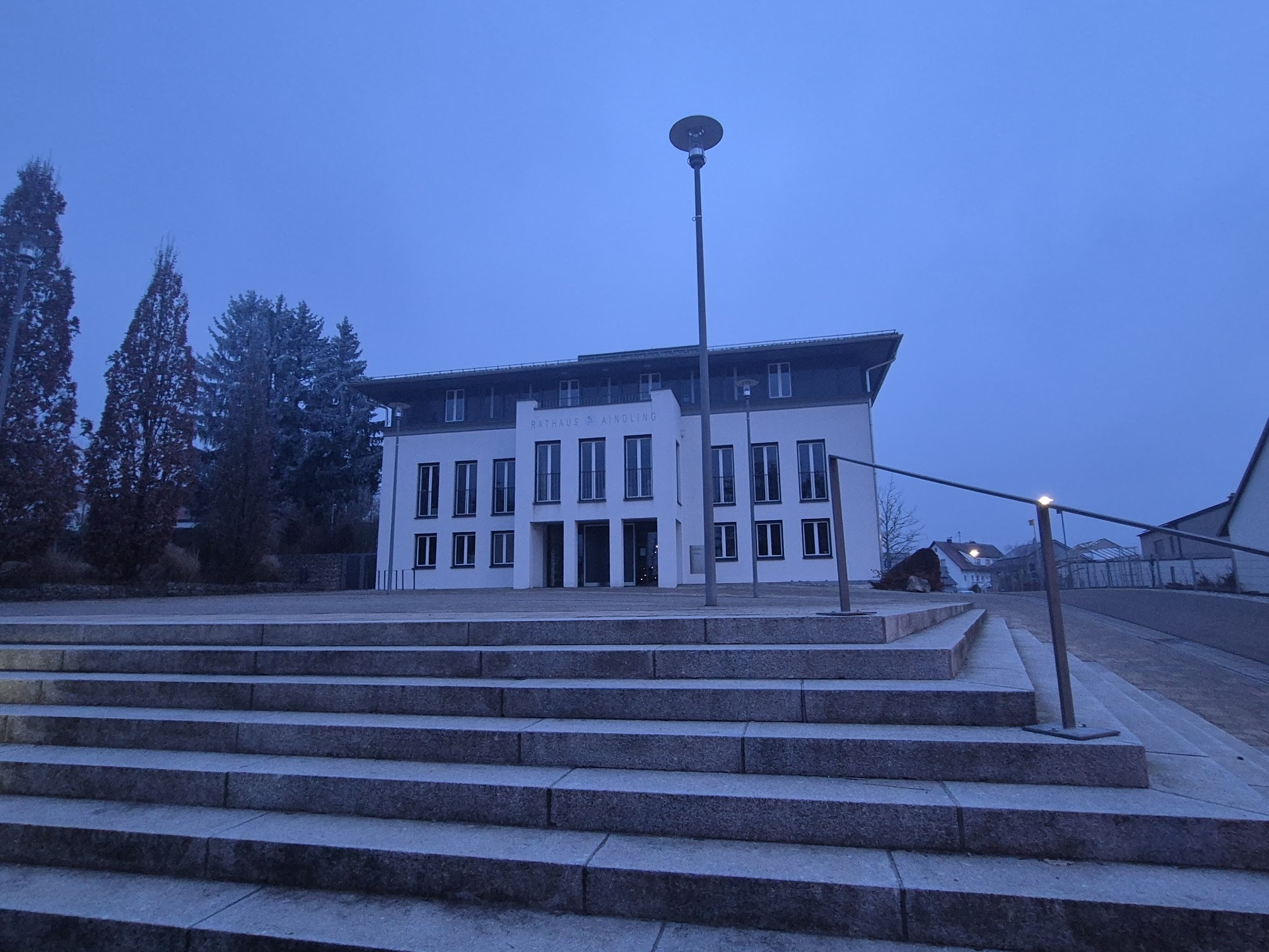
On one corner, a small bus stop. Silent. Like a scene waiting for a story to begin. A little further on, the town hall stands — simple yet imposing, with clean lines and a quiet sense of dignity that defines small European communities. And somewhere within all of this, you realize something very simple — yet rare: Perhaps the most beautiful journeys are not the ones that impress you…
but the ones that calm you.
🌳 DID YOU KNOW? | MAIBAUM
The Maibaum (“Maypole”) is one of Bavaria’s most iconic symbols. It is a tall wooden pole, usually painted in blue and white, placed in the central square of a village.
The decorative figures on it represent professions and scenes from everyday life, acting as a visual “story” of the community.
📌 Fun fact: In many villages, there is still a tradition of “stealing” the Maibaum from neighboring communities — with its return often celebrated with beer and festivities.