
Pompeii is one of the few places in the world where you can walk through streets, homes and workshops preserved exactly as they were 2,000 years ago. And while visitors are often fascinated by the public baths, the marketplaces and the grand villas, there is one attraction that always catches them by surprise.
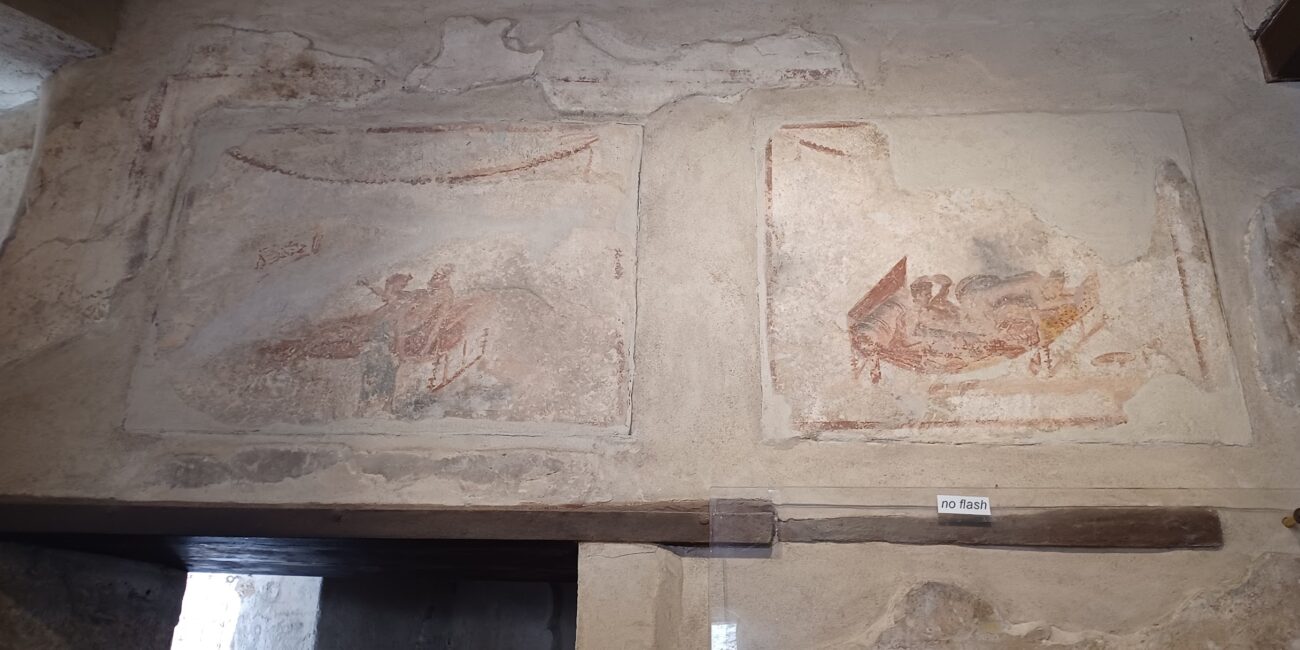
As you wander through the narrow passageways of the archaeological site, you suddenly come across a row of small chambers. At first they seem like simple rooms — until you look up at the walls. Faded frescoes depicting erotic scenes reveal their true purpose. These were Pompeii’s famous brothels, the lupanaria, which operated from early morning until late at night, serving travelers, merchants and local workers.
The scenes painted on the walls were not meant as decoration; they served a practical purpose. They acted as an illustrated “menu” of the services offered, designed so that even those who did not speak the language — travelers from across the Roman Empire — could understand what was available.
Despite the passing of centuries, the figures and colors remain visible, offering a rare glimpse into a society that did not treat sexuality as taboo but as a natural, public and fully accepted part of life.
The stone beds
Inside the rooms lie the primitive stone beds on which the workers of the brothel carried out their daily tasks. In their time they were covered with mattresses and fabrics — today they remain bare, but still unmistakably connected to the profession and the era.
The most unexpected “sign”
Just outside the brothel, on one of the streets, there is a carved symbol that leaves no space for confusion: a phallus etched into the pavement. It was the Romans’ way of guiding foreigners straight to the brothels — an ancient “adult signpost” pointing the way.
Pompeian society through its walls
The erotic rooms are more than an unusual attraction. They are a vivid, direct window into the social fabric of a lively port city — one filled with thousands of travelers, different social classes and a daily rhythm shaped by commerce, movement and human desire. Sexuality wasn’t hidden; it existed openly and naturally within everyday life.
The ashes of Vesuvius preserved one of the most authentic, unfiltered snapshots of human history.
A walk into the past
As you move through the tiny rooms, the low doorways and the faded painted figures, you feel as if you step for a moment into the everyday life of another era. And standing before these frescoes, you understand that Pompeii is not just an archaeological wonder — it is the most honest city of antiquity, a city that hid nothing.